
Main drain cleaning
One slow sink can wait for a plumber. Every drain slow at once means the main line, and the main line is our work.
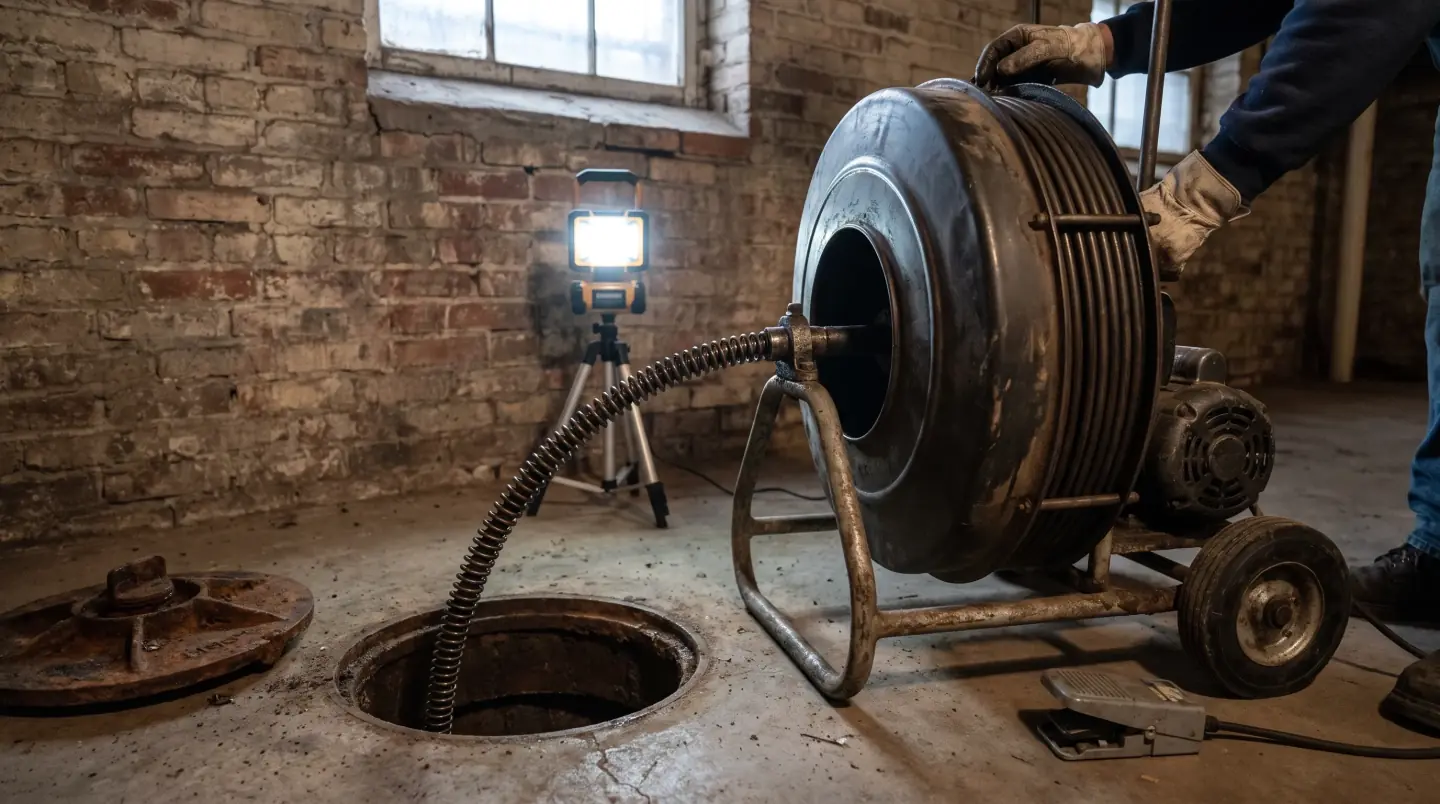
How to tell it’s the main
All the drains in a house feed one pipe on the way out. Block that pipe and the water turns up at the lowest opening it can find, usually a basement floor drain, a shower pan or the bottom of a tub.
Run the washer and watch the floor drain. Flush upstairs and listen at the tub. Fixtures on different floors reacting to each other tell you the trouble sits past the last branch, far beyond the reach of a plunger.
- Two or more fixtures backing up together
- Water rising in a floor drain as the washer empties
- A toilet that gurgles when a sink runs
- Sewage smell coming from a basement drain
What we clean
Main sewer drains first, along with the kitchen, bathroom, shower and tub, floor and laundry lines that run into them. Each kind clogs in its own way. Kitchen lines collect grease, and the EPA counts grease in 47 percent of reported sewer blockages. Bath lines catch hair and soap, laundry lines catch lint, and floor drains silt up.
Why a clog comes back
A clean line stays clean for a long time. When the same drain backs up again within months, something in the pipe is catching what passes through it: roots at a joint, a low spot holding solids, or a section knocked out of line.
That’s when a camera inspection earns its keep. It shows whether you had a clog or have a damaged pipe, and you keep the footage. If the line is sound, hydro jetting may be all it needs. If it isn’t, the next call is about repair.
If it turns out to be a fixture
Sometimes the line runs clear and the trouble is a trap, a toilet or a faucet. Those belong to your plumber, and we’ll tell you so.
Related work
Main Drain Cleaning across 77 Illinois towns, including Granite City, Collinsville, East St. Louis, Edwardsville, Alton, O'Fallon, Godfrey, Belleville.
Answers
Main Drain Cleaning: common questions
How do I know if my main sewer drain is clogged?
Look for several fixtures acting up together. A floor drain that rises when the washer empties, a tub that fills when a toilet flushes, and gurgling from a drain nobody is using all point to the main. A single slow sink usually points only to that sink’s own branch.
How often should a main drain be cleaned?
A sound line has no fixed schedule, and many go years between cleanings. If yours needs it once or twice a year, find out why. Roots, a sag or a shifted joint will keep catching waste, and one camera run tells you which of those you are paying to clear.
Can I pour chemical drain cleaner down a clogged main line?
Skip it. A bottle poured into a sink rarely reaches a blockage that far down the pipe, so it tends to sit in standing water. That leaves caustic water in the line for whoever opens the clean-out next, and roots or broken pipe will not care about it anyway.
What does main drain cleaning cost?
We don’t publish a flat figure because the job varies. Three things move it: whether the line has a clean-out that can be reached, how far down the blockage sits, and what is causing it. Ask for an estimate on the form and a representative will talk it through.
Where is the clean-out for my main drain?
Often it is a capped pipe near the foundation, in the basement floor, or out in the yard along the line’s path. Older houses may not have one at all. Tell us when you call, and if there isn’t one, a clean-out can be installed as part of the work.