
Backwater valve installation
Most people call a plumber after a flooded basement. Keeping the sewer out in the first place is work on the line itself, and that’s us.
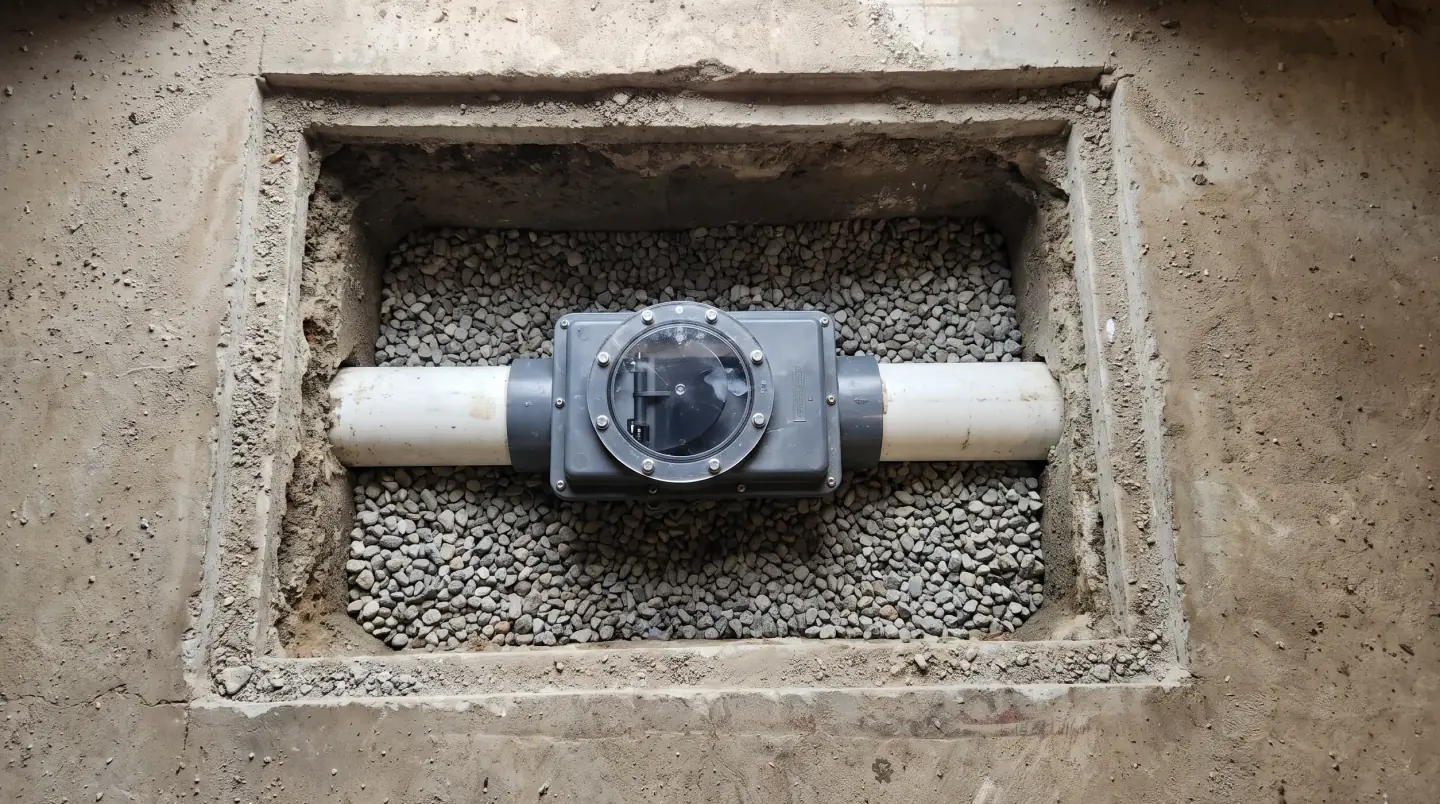
What the valve does
A backwater valve sits on the sewer line with a flap that lets water leave the building and closes when flow reverses. If the main in the street surcharges, the flap keeps that water out of your lowest drains.
Why the Metro East asks about them
Some of the older systems around here still carry storm water and sewage in one pipe. Belleville’s combined system dates to 1912, and Wood River’s has an overflow to the Mississippi. When a big rain fills pipes like those, water looks for the lowest opening, and for many houses that’s a basement floor drain.
Separate systems can still surcharge when rain gets in where it shouldn’t, and Belleville’s wastewater department names downspouts and sump pumps tied into the sanitary sewer among the causes.
Is one required?
Not by the state. Illinois repealed its plumbing code section on backwater valves in February 2004. A town may still require or recommend one, and an insurer may ask about it, so check with your public works office. We install them in both residential and commercial buildings.
What to know before you buy one
A valve guards the fixtures downstream of where it’s placed. While the flap is shut, your own drains have nowhere to go, so running the washer in a storm can flood the basement from the inside. The flap also needs a look now and then, because a bit of debris can hold it open. Tell us about your layout and depth when you call, and a camera run can show where it would go.
Related work
Backwater Valve Installation across 77 Illinois towns, including Granite City, Collinsville, East St. Louis, Edwardsville, Alton, O'Fallon, Godfrey, Belleville.
Answers
Backwater Valve Installation: common questions
What does a backwater valve do?
It lets wastewater flow out of a building and shuts when sewer water tries to come back in. A flap inside the valve closes against the reverse flow. That protects basement drains and low fixtures when a main in the street surcharges, which commonly happens during heavy rain.
Should I install a backwater valve?
It is worth considering if your basement has backed up during storms, or if your fixtures sit below the street’s sewer level. A dry basement on a hilltop has less reason for one. Your history, your town’s system and your insurer’s requirements are the things to weigh.
Does Illinois require a backwater valve?
Not statewide. Illinois repealed its plumbing code section on them, effective February 18, 2004. Towns and insurers can still set their own requirements, so your local public works or building office is the place to ask. Commercial buildings may face separate rules from the local authority too.
Where should a backwater valve be installed?
It goes on the sewer line at a point that protects the low fixtures and stays reachable for maintenance. Some sit in the basement floor, and others go outside in a pit along the lateral. Depth and layout decide it, and a camera run can help find the right location.
How can I tell if my house already has a backwater valve?
Look for an access cover in the basement floor near where the main line leaves, or an access lid outside near the foundation. Old inspection records may mention one too. A camera run from the clean-out will reveal it as well, if nothing is visible from the surface.